

In our pursuit of consumer understanding, we must ensure our methodologies match our objectives. The Usage & Attitude (U&A) study is a powerful tool in our research arsenal, but its misapplication remains a common and costly pitfall.
A U&A is designed to establish a comprehensive, foundational understanding of a market: the what, how, and why of consumer behavior, needs, and perceptions. However, deploying it to answer specific, tactical questions is often an inefficient use of resources that yields underwhelming results.
To clarify its application, consider this framework:
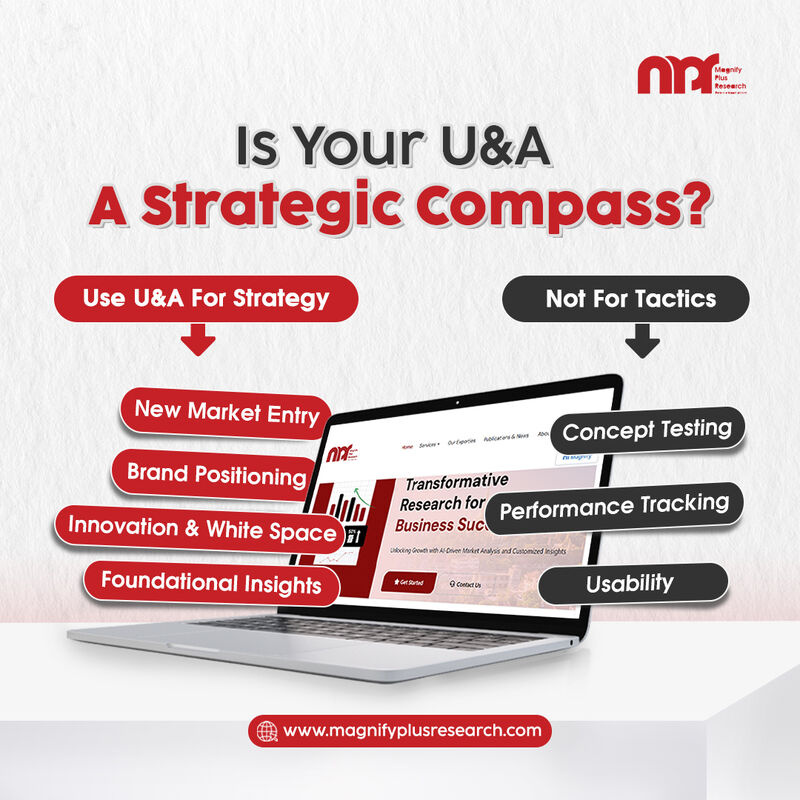
Deploy a U&A for Foundational Intelligence:
This is its core strength. Initiate a U&A when you require a robust, evidence-based platform for long-term strategy.
Market Entry: Mapping a new category’s landscape, including usage occasions, drivers, and competitive perceptions.
Strategic Formulation: Informing master brand strategy, market segmentation, and positioning.
Innovation Pipelines: Identifying white spaces and unmet needs to guide portfolio development.
Knowledge Currency: Updating a market model that has become stale or incomplete.
Employ Alternative Methods for Tactical Objectives:
When your questions are narrow, your tools should be too.
For specific asset evaluation (e.g., a concept, price point, or packaging), a focused monadic or concept test provides cleaner, more direct diagnostic data.
For measuring brand health or campaign impact, a structured brand tracking study is purpose-built to monitor KPIs over time.
For optimizing a user interface or journey, UX/usability testing offers the behavioral granularity needed for design iteration.
The Researcher’s Mandate:
Our role extends beyond fielding studies; it is to be strategic advisors on insight generation. Recommending a U&A when a tactical test is warranted—or vice versa—undermines the integrity of our function and the impact of our work.
Let’s champion methodological rigor. The right tool, applied at the right time, is what separates data from genuine, decision-driving insight.
I’m curious to hear from fellow insights professionals. How do you guide your stakeholders on the U&A versus focused study decision?
hashtag#MarketResearch hashtag#ConsumerInsights hashtag#UXResearch hashtag#BrandStrategy hashtag#ProductDevelopment hashtag#DataDriven hashtag#ResearchMethods hashtag#StrategicPlanning